Mental health is essential for a healthy and balanced life. However, conditions such as depression, anxiety, bipolar disorder, and other psychiatric challenges can affect a person’s emotions, relationships, and daily activities. When these difficulties become overwhelming, professional support can make an important difference.
Finding a reliable mental health rehabilitation centre in Pakistan can help individuals access appropriate assessment, treatment, and ongoing support. These services aim to improve emotional well-being, strengthen daily functioning, and support long-term recovery.
What Is Mental Health Rehabilitation?
Mental health rehabilitation is a structured approach that helps individuals manage psychiatric conditions and improve their quality of life.
Depending on individual needs, treatment may include psychiatric assessment, psychological therapy, medication management, counseling, and support with everyday activities.
The goal is not simply to manage symptoms but also to help individuals build confidence, independence, and healthier coping strategies.
Common Mental Health Conditions
Mental health rehabilitation services may support people experiencing:
- Depression: Persistent sadness, hopelessness, and loss of interest.
- Anxiety disorders: Excessive worry, fear, and panic symptoms.
- Bipolar disorder: Episodes of depression and unusually elevated or irritable mood.
- Schizophrenia: Symptoms that may include hallucinations, delusions, and difficulties with thinking.
- Trauma-related disorders: Emotional difficulties following distressing experiences.
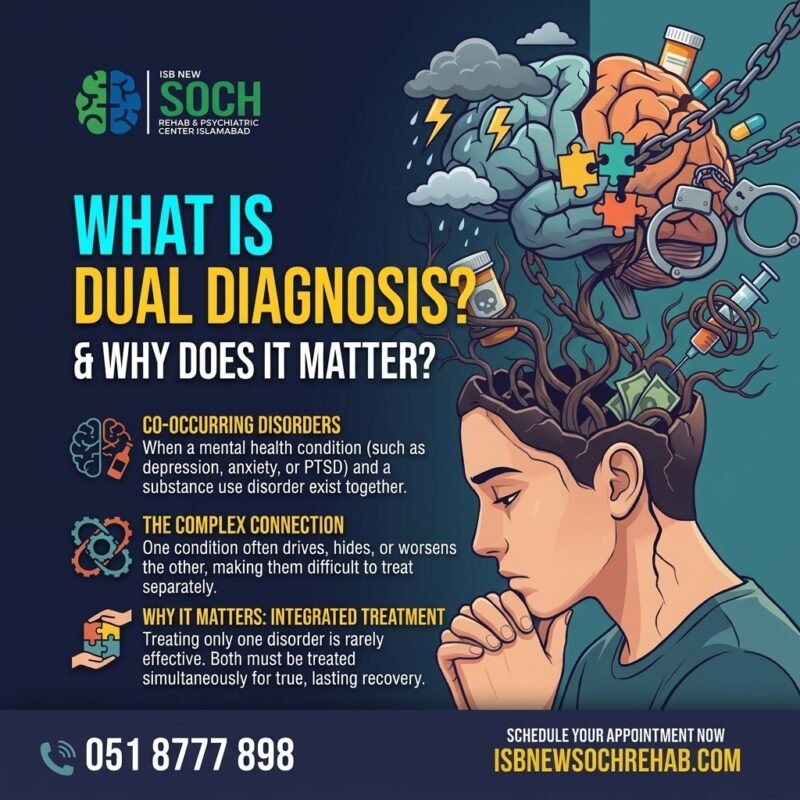
- Co-occurring disorders: Mental health conditions occurring alongside drug or alcohol addiction.
A qualified mental health professional should assess symptoms and recommend appropriate treatment.
Services Offered by Mental Health Rehabilitation Centres
Services differ between facilities, but may include:
1. Psychiatric Assessment
A psychiatrist evaluates symptoms, medical history, and treatment needs to develop an appropriate care plan.
2. Psychological Therapy
Counseling and therapies such as Cognitive Behavioral Therapy (CBT) can help individuals manage difficult emotions and unhelpful thought patterns.
3. Medication Management
Prescribed medication may help manage certain psychiatric conditions. Treatment should be monitored by a qualified healthcare professional.
4. Addiction and Dual Diagnosis Treatment
Some individuals experience mental health conditions alongside substance use disorders. Coordinated treatment can address both concerns.
5. Family Counseling
Family education and counseling can improve communication and help loved ones provide appropriate support.
6. Recovery and Rehabilitation Planning
Ongoing support can help individuals develop healthy routines, improve social functioning, and manage future challenges.
Benefits of Professional Mental Health Treatment
Seeking professional care can offer several benefits:
- Better understanding of mental health symptoms.
- Access to appropriate treatment and professional guidance.
- Improved emotional coping skills.
- Support with relationships and everyday responsibilities.
- Early recognition of worsening symptoms.
- Continued care and relapse-prevention planning when needed.
The right treatment depends on the individual’s condition, preferences, and clinical needs.
How to Choose the Right Mental Health Rehabilitation Centre
Before selecting a facility in Pakistan, consider:
- Qualifications and experience of psychiatrists and psychologists.
- Availability of individualized treatment plans.
- Medical supervision and emergency arrangements.
- Privacy, patient rights, and respectful care.
- Family involvement where appropriate.
- Follow-up appointments and ongoing support.
- Clear treatment policies and transparent fees.
Avoid facilities that promise guaranteed cures or cannot explain their professional qualifications and treatment methods.
Mental Health Support in Islamabad
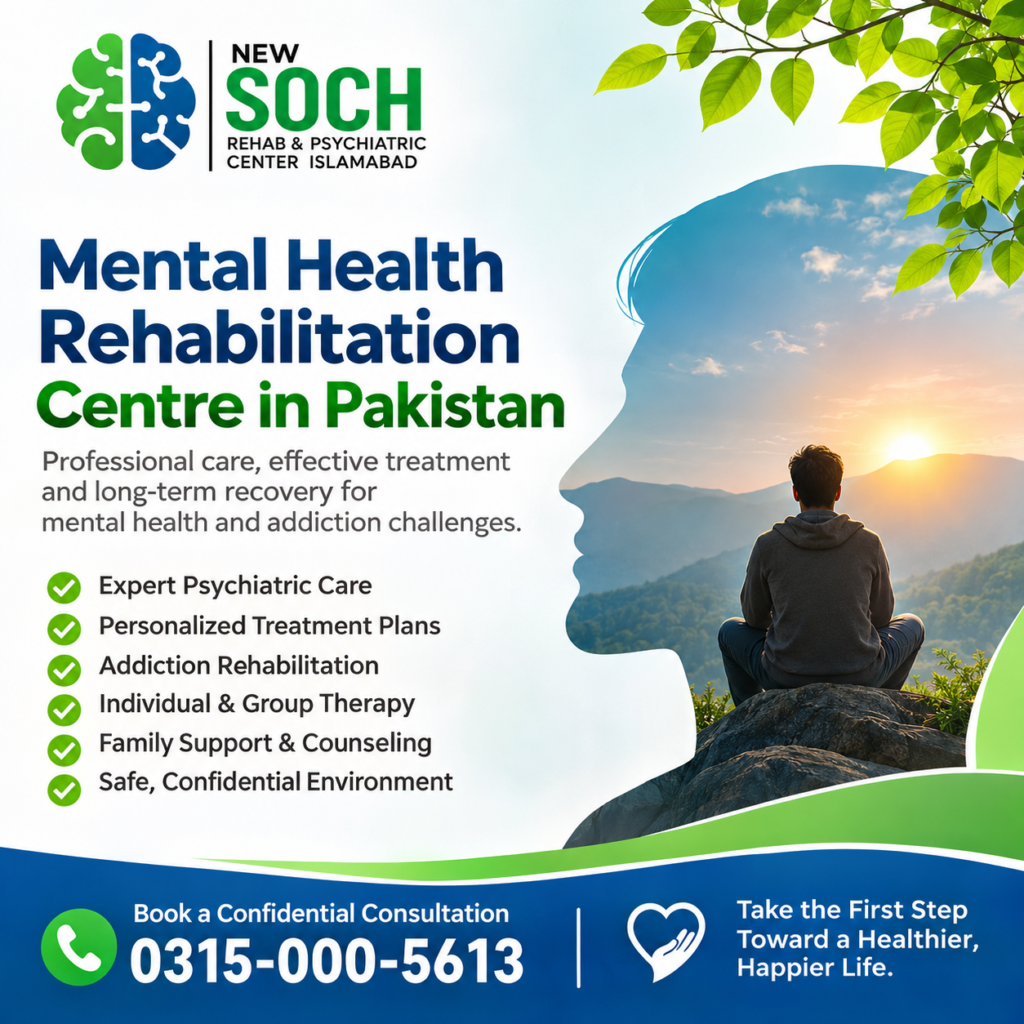
Individuals and families seeking professional mental health support in Islamabad can contact New Soch Rehab and Psychiatric Center Islamabad to ask about available psychiatric and rehabilitation services.
Before choosing a program, discuss the individual’s symptoms and needs, confirm the qualifications of the clinical team, and ask about assessment, treatment options, costs, and follow-up care.
Seeking help early can make it easier to understand mental health concerns and find suitable support.
Frequently Asked Questions
1. What does a mental health rehabilitation centre do?
It provides structured support for individuals experiencing mental health challenges through services such as psychiatric assessment, therapy, medication management, and recovery planning.
2. Which mental health conditions can rehabilitation centres support?
Depending on their clinical services, centres may support individuals with depression, anxiety, bipolar disorder, schizophrenia, trauma-related conditions, and co-occurring addiction.
3. Is mental health rehabilitation only for severe conditions?
No. Professional mental health support can benefit people experiencing different levels of difficulty. The appropriate treatment setting depends on individual needs.
4. Can mental health conditions be treated?
Many mental health conditions can be managed effectively with appropriate treatment, which may include therapy, medication, and ongoing professional support.
5. When should someone seek mental health treatment?
Professional help is advisable when emotional or psychological symptoms persist, interfere with daily life, or become difficult to manage. Suicidal thoughts or immediate safety concerns require urgent medical assistance.
Conclusion
Mental health rehabilitation plays an important role in helping individuals manage psychiatric conditions and improve their quality of life. With appropriate assessment, professional treatment, family support, and continued care, individuals can work toward better emotional health and greater independence.
For those exploring mental health services in Pakistan, New Soch Rehab and Psychiatric Center Islamabad can be contacted to ask about available treatment and assessment options.