New Soch Rehab Best Rehabilitation Center Islamabad Pakistan

Table of Contents

Addiction and mental health challenges do not affect individuals alone—they also impact families, relationships, and social dynamics. When a loved one struggles with substance use or psychological conditions, family members often experience emotional stress, confusion, and uncertainty. A structured Family Support Program in Islamabad, Pakistan plays a vital role in helping families understand these challenges and actively participate in the recovery process.

At New Soch Rehab and Psychiatric Center Islamabad, family support is considered an essential part of comprehensive care. The center offers guidance, counseling, and educational resources to help families provide meaningful support while also maintaining their own emotional well-being.

This article explores the importance of family support programs, their benefits, and how they contribute to long-term recovery.


Understanding the Role of Family in Recovery

Family plays a central role in an individual’s recovery journey. Supportive relationships can positively influence motivation, emotional stability, and long-term outcomes.

However, addiction and mental health issues can strain family relationships. Misunderstandings, lack of awareness, and emotional distress may create barriers to effective support.

A structured Family Support Program in Islamabad, Pakistan helps bridge this gap by:

  • Educating families about addiction and mental health
  • Improving communication between family members
  • Encouraging healthy boundaries
  • Promoting emotional understanding and empathy

At New Soch Rehab and Psychiatric Center Islamabad, families are guided to become active participants in the recovery process.


Why Family Support Programs Are Important

Family support programs provide essential tools and knowledge that help families navigate the challenges of addiction and recovery.

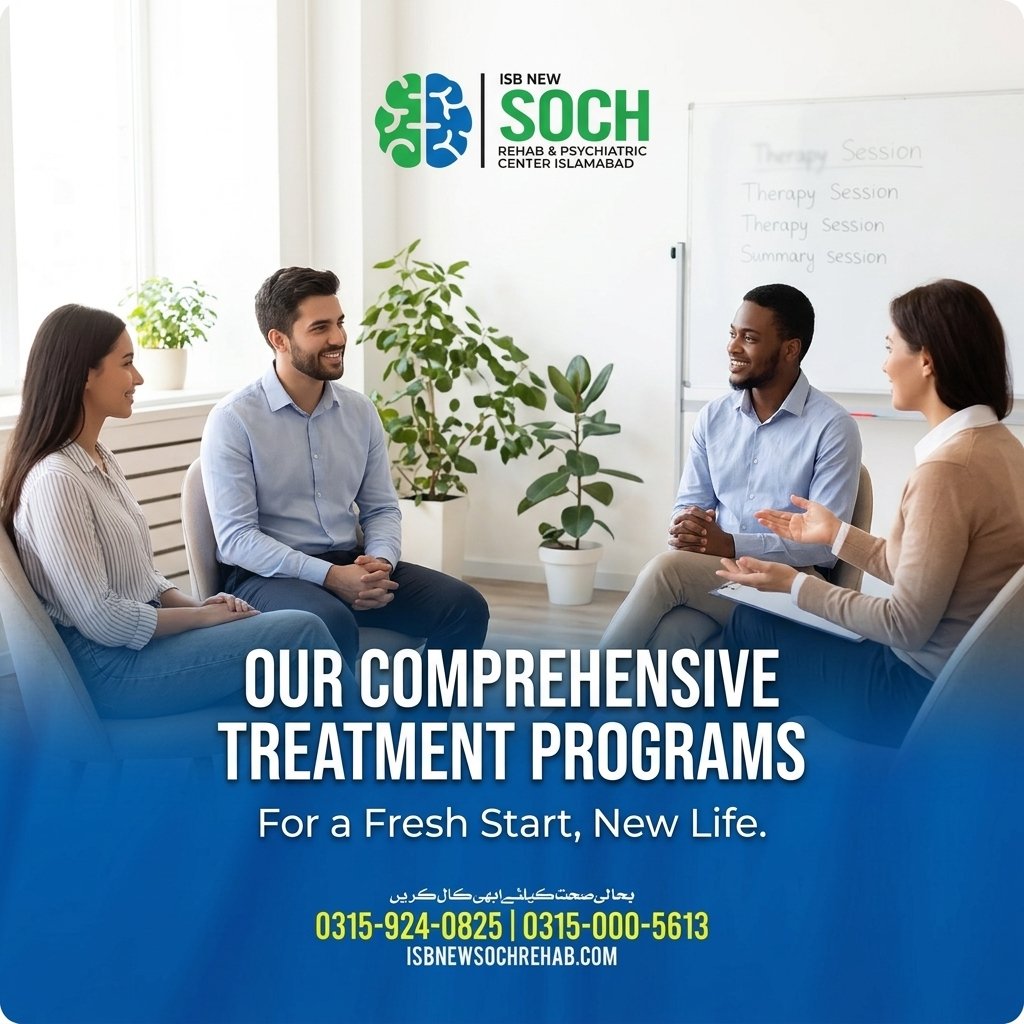
Family Support Program in Islamabad, Pakistan – Family Support Program in Islamabad, Pakistan

Emotional Support for Families

Families often experience anxiety, frustration, and emotional exhaustion. Support programs provide a safe space to express these feelings and receive guidance.

Improved Communication

Clear and open communication is key to rebuilding relationships. Programs help families learn effective communication skills.

Better Understanding of Addiction

Education helps families recognize that addiction is a medical condition, not a personal failure. This understanding reduces stigma and promotes compassion.

A well-structured Family Support Program in Islamabad, Pakistan focuses on empowering families with knowledge and practical skills.


Key Components of a Family Support Program

A comprehensive family support program includes various elements designed to address emotional, psychological, and educational needs.

Family Counseling Sessions

Counseling sessions allow families to discuss concerns, resolve conflicts, and rebuild trust in a guided environment.

Educational Workshops

Workshops provide information about addiction, mental health, and recovery processes, helping families understand what their loved one is experiencing.

Communication Skills Training

Families learn how to communicate effectively, avoid conflict, and support recovery without enabling harmful behaviors.

Stress Management Techniques

Programs also focus on helping family members manage their own stress and emotional challenges.

At New Soch Rehab and Psychiatric Center Islamabad, these components are integrated into the Family Support Program in Islamabad, Pakistan to ensure holistic care.


How Family Support Enhances Recovery

Family involvement can significantly improve recovery outcomes. When individuals feel supported by their loved ones, they are more likely to stay motivated and engaged in treatment.

Benefits of family support include:

  • Increased emotional stability
  • Reduced feelings of isolation
  • Improved treatment adherence
  • Stronger relationships
  • Enhanced relapse prevention

A structured Family Support Program in Islamabad, Pakistan ensures that families provide support in a healthy and constructive manner.


Setting Healthy Boundaries

One of the most important aspects of family support is learning to set healthy boundaries. While support is essential, it is equally important to avoid enabling behaviors.

Healthy boundaries may include:

  • Encouraging responsibility
  • Avoiding financial or emotional enabling
  • Maintaining clear communication
  • Respecting personal space

At New Soch Rehab and Psychiatric Center Islamabad, families are guided on how to support their loved ones while maintaining their own well-being.


Addressing Co-Occurring Mental Health Conditions

Many individuals dealing with addiction also experience mental health challenges such as anxiety, depression, or trauma. These conditions can affect both the individual and their family.

Family support programs provide education on:

  • Recognizing mental health symptoms
  • Understanding treatment approaches
  • Supporting emotional well-being
  • Encouraging professional care

An integrated Family Support Program in Islamabad, Pakistan addresses both addiction and mental health to ensure comprehensive recovery.


The Importance of Self-Care for Family Members

Supporting a loved one through recovery can be emotionally demanding. Family members must also prioritize their own well-being.

Self-care practices may include:

  • Seeking counseling or support groups
  • Practicing relaxation techniques
  • Maintaining social connections
  • Setting realistic expectations

At New Soch Rehab and Psychiatric Center Islamabad, families are encouraged to focus on their own mental health while supporting their loved ones.


Relapse Prevention and Family Involvement

Relapse is a possibility in the recovery process, and family members play an important role in prevention. By understanding triggers and warning signs, families can provide timely support.

Relapse prevention strategies include:

  • Recognizing early warning signs
  • Encouraging continued therapy
  • Maintaining a supportive home environment
  • Promoting healthy routines

A structured Family Support Program in Islamabad, Pakistan equips families with the tools needed to support long-term recovery.


Building a Supportive Home Environment

A stable and supportive home environment is essential for recovery. Families can create a positive environment by:

  • Encouraging open communication
  • Avoiding judgment or criticism
  • Supporting healthy habits
  • Respecting the recovery process

At New Soch Rehab and Psychiatric Center Islamabad, families are guided on how to create an environment that promotes healing and growth.


Frequently Asked Questions (FAQs)

1. What is a family support program?

A family support program provides education, counseling, and guidance to help families support loved ones dealing with addiction or mental health challenges.

2. Why is family involvement important in recovery?

Family involvement provides emotional support, improves communication, and helps individuals stay motivated during recovery.

3. Can family therapy improve relationships?

Yes, family therapy helps resolve conflicts, rebuild trust, and strengthen relationships.

4. How can families avoid enabling behavior?

Families can avoid enabling by setting healthy boundaries and encouraging responsibility.

5. Do family members need support too?

Yes, family members benefit from counseling and support programs to manage their own emotional well-being.


Conclusion

A Family Support Program in Islamabad, Pakistan plays a crucial role in the recovery process by empowering families with knowledge, skills, and emotional support. Addiction and mental health challenges affect the entire family system, making it essential for loved ones to be involved in a structured and supportive manner.

At New Soch Rehab and Psychiatric Center Islamabad, family support programs are designed to promote understanding, improve communication, and strengthen relationships. By working together, individuals and families can navigate the challenges of recovery and move toward a healthier and more stable future.

Tags:

Related Articles