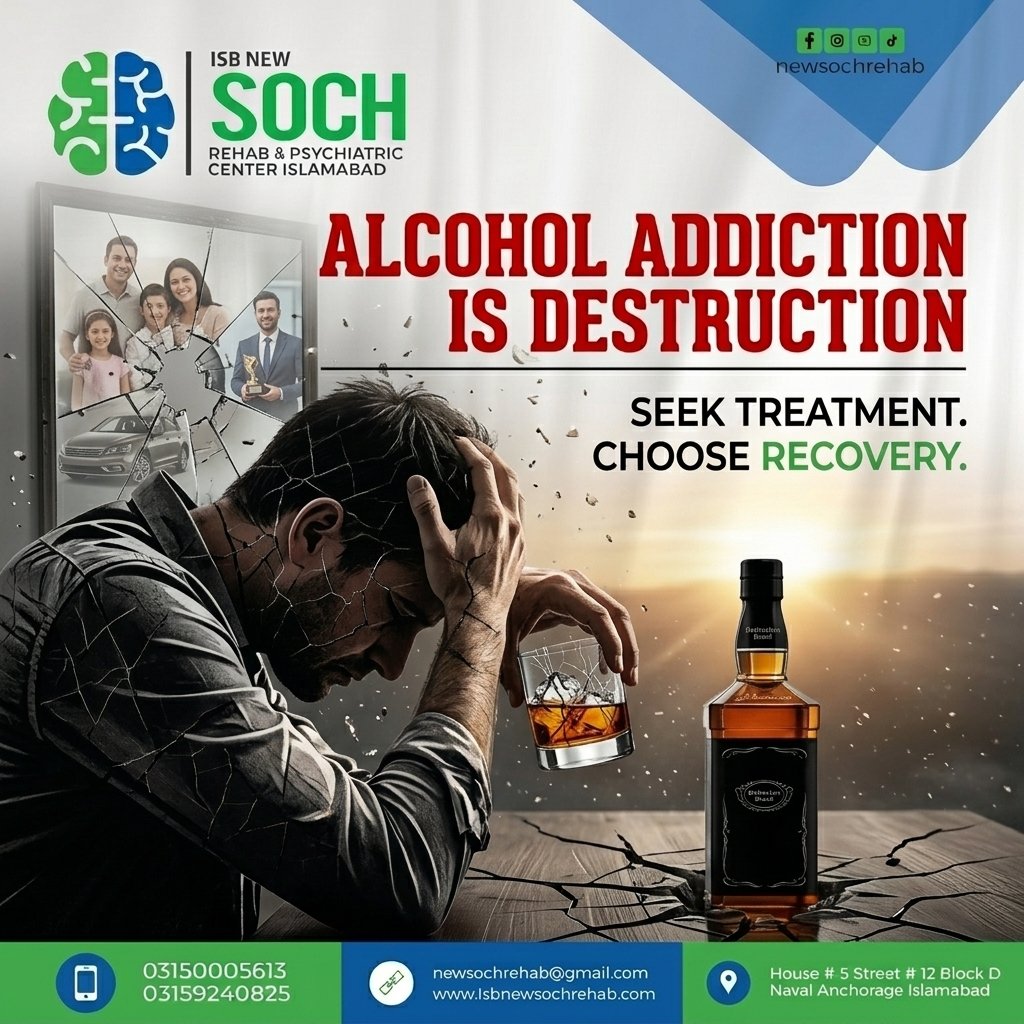
Alcohol addiction is a serious health condition that can affect a person’s physical health, mental well-being, relationships, work, and daily responsibilities. It is sometimes called alcohol use disorder (AUD), a condition in which drinking becomes difficult to control despite negative consequences.
Alcohol addiction is not simply a matter of willpower. Several factors, including genetics, stress, mental health, environment, and patterns of alcohol use, can influence the development of problematic drinking. With appropriate professional support, many people can make meaningful progress toward recovery.
At New Soch Rehab and Psychiatric Center Islamabad, addiction and mental health care is approached with compassion, confidentiality, and respect for each individual’s circumstances. Treatment should begin with an appropriate assessment so that care can be matched to the person’s medical, psychological, and social needs.
What Is Alcohol Addiction?
Alcohol addiction occurs when a person develops a pattern of alcohol use that causes significant problems or distress and becomes difficult to control.
Possible signs include:
- Drinking more or for longer than intended
- Repeated attempts to reduce or stop drinking without success
- Strong cravings for alcohol
- Spending significant time obtaining, drinking, or recovering from alcohol use
- Neglecting work, education, family, or other responsibilities
- Continuing to drink despite health or relationship problems
- Developing tolerance
- Experiencing withdrawal symptoms when alcohol use is reduced or stopped
Not everyone who drinks alcohol has an alcohol use disorder. A healthcare professional can help determine whether drinking has become problematic.
Common Causes and Risk Factors
Alcohol addiction usually develops through a combination of factors rather than one single cause.
Genetic Factors
A family history of alcohol problems may increase vulnerability, although genetics do not determine a person’s future.
Mental Health
Depression, anxiety, trauma, and other psychological difficulties can sometimes contribute to problematic alcohol use. Some people may use alcohol as a way to cope with emotional distress.
Stress and Environment
Chronic stress, social pressure, availability of alcohol, and certain social environments can influence drinking patterns.
Repeated Alcohol Use
Frequent or heavy drinking can increase the risk of developing tolerance, dependence, and alcohol use disorder.
Understanding these factors can help treatment address the underlying issues contributing to alcohol use.
How Alcohol Addiction Can Affect Health
Long-term problematic alcohol use can affect many parts of the body.
Potential consequences may involve:
- Liver problems
- Cardiovascular health
- Digestive health
- Sleep
- Memory and concentration
- Mood and emotional stability
- Relationships and family life
- Work and financial stability
The risks vary according to factors such as drinking pattern, duration of use, overall health, and individual vulnerability.
Alcohol Addiction and Mental Health
Alcohol and mental health can influence each other. Some individuals may drink to temporarily cope with anxiety, sadness, trauma, or stress. However, alcohol can also worsen mood and sleep and may complicate existing mental health symptoms.
When alcohol addiction occurs alongside a psychiatric condition, an integrated assessment is particularly important. Treatment may need to address both substance use and mental health rather than treating either issue in isolation.
Alcohol Withdrawal and Detoxification
One of the most important safety considerations in alcohol recovery is withdrawal.
People who have developed physical dependence may experience symptoms after significantly reducing or stopping alcohol. These can include:
- Anxiety
- Shaking
- Sweating
- Nausea
- Insomnia
- Irritability
- Rapid heartbeat
In some cases, alcohol withdrawal can become severe and potentially life-threatening, including seizures or delirium. Therefore, people who drink heavily or regularly should not assume that suddenly stopping alcohol on their own is always safe.
A healthcare professional should assess the need for medically supervised withdrawal management. Detoxification is only the initial stage of recovery; ongoing treatment is often needed to address dependence and reduce the risk of returning to problematic drinking.
Treatment for Alcohol Addiction
Effective treatment is individualized and may involve several components.
Medical Assessment
A professional assessment can consider alcohol use, physical health, withdrawal risk, medications, mental health, and previous treatment experiences.
Behavioral Therapy
Counseling can help individuals understand triggers, identify unhealthy patterns, and develop practical coping strategies.
Cognitive Behavioral Therapy
CBT can help individuals recognize thoughts and behaviors associated with alcohol use and develop healthier responses to stress and cravings.
Motivational Approaches
Some people feel uncertain about changing their drinking habits. Motivational counseling can help them explore their reasons for recovery and establish realistic goals.
Family Counseling
Family involvement can improve communication, rebuild trust, and help relatives understand addiction without unnecessary blame or stigma.
At New Soch Rehab and Psychiatric Center Islamabad, treatment can be adapted to the individual’s clinical condition and recovery goals.
The Importance of Family Support
Alcohol addiction can affect the entire household. Family members may experience stress, disappointment, fear, or confusion.
Healthy family support may involve:
- Listening without judgment
- Encouraging professional treatment
- Learning about alcohol use disorder
- Supporting healthy routines
- Maintaining appropriate boundaries
- Avoiding behaviors that unintentionally enable continued drinking
Family members also deserve support for their own emotional well-being.
Relapse Prevention
Recovery is an ongoing process. Relapse prevention helps individuals recognize situations that could increase the risk of returning to problematic alcohol use.
Strategies may include:
- Identifying personal triggers
- Developing healthier ways to manage stress
- Avoiding high-risk situations when possible
- Maintaining supportive relationships
- Continuing counseling or follow-up care
- Establishing healthy sleep and daily routines
- Creating a plan for responding to cravings
A setback does not mean that treatment has failed. It can provide useful information about triggers and areas where additional support may be needed.
Building a Healthier Life in Recovery
Recovery involves more than avoiding alcohol. It can also be an opportunity to rebuild physical health, relationships, confidence, and daily structure.
Helpful habits may include:
- Regular physical activity
- Consistent sleep
- Balanced nutrition
- Meaningful hobbies
- Healthy social connections
- Stress-management techniques
- Education or vocational goals
Progress may happen gradually, and recovery looks different for every individual.
Frequently Asked Questions
1. What is alcohol addiction?
Alcohol addiction, clinically known as alcohol use disorder, is a pattern of alcohol use that becomes difficult to control and causes significant health, social, emotional, or functional problems.
2. Can alcohol addiction be treated?
Yes. Treatment may include medical assessment, withdrawal management when necessary, counseling, behavioral therapies, family support, and ongoing relapse-prevention care.
3. Is it safe to suddenly stop drinking alcohol?
It depends on the individual’s level of alcohol dependence. For people who drink heavily or have developed physical dependence, sudden withdrawal can sometimes be dangerous. Professional medical assessment is recommended.
4. Does alcohol addiction affect mental health?
It can. Alcohol may worsen certain mental health symptoms and can complicate conditions such as depression, anxiety, and trauma-related disorders. Both concerns should be assessed appropriately.
5. How can family members help someone with alcohol addiction?
Families can encourage professional treatment, provide non-judgmental support, learn about addiction, maintain healthy boundaries, and participate in family counseling when appropriate.
Conclusion
Alcohol Addiction is a complex health condition that can affect nearly every area of a person’s life. Recognizing the warning signs and seeking professional support can be an important first step toward recovery.
At New Soch Rehab and Psychiatric Center Islamabad, care focuses on the individual’s overall health and circumstances. Through appropriate assessment, counseling, mental health support, family involvement, and recovery planning, individuals can work toward healthier coping strategies and a more stable life. Recovery is a personal process, and seeking help is a positive step rather than a sign of weakness.