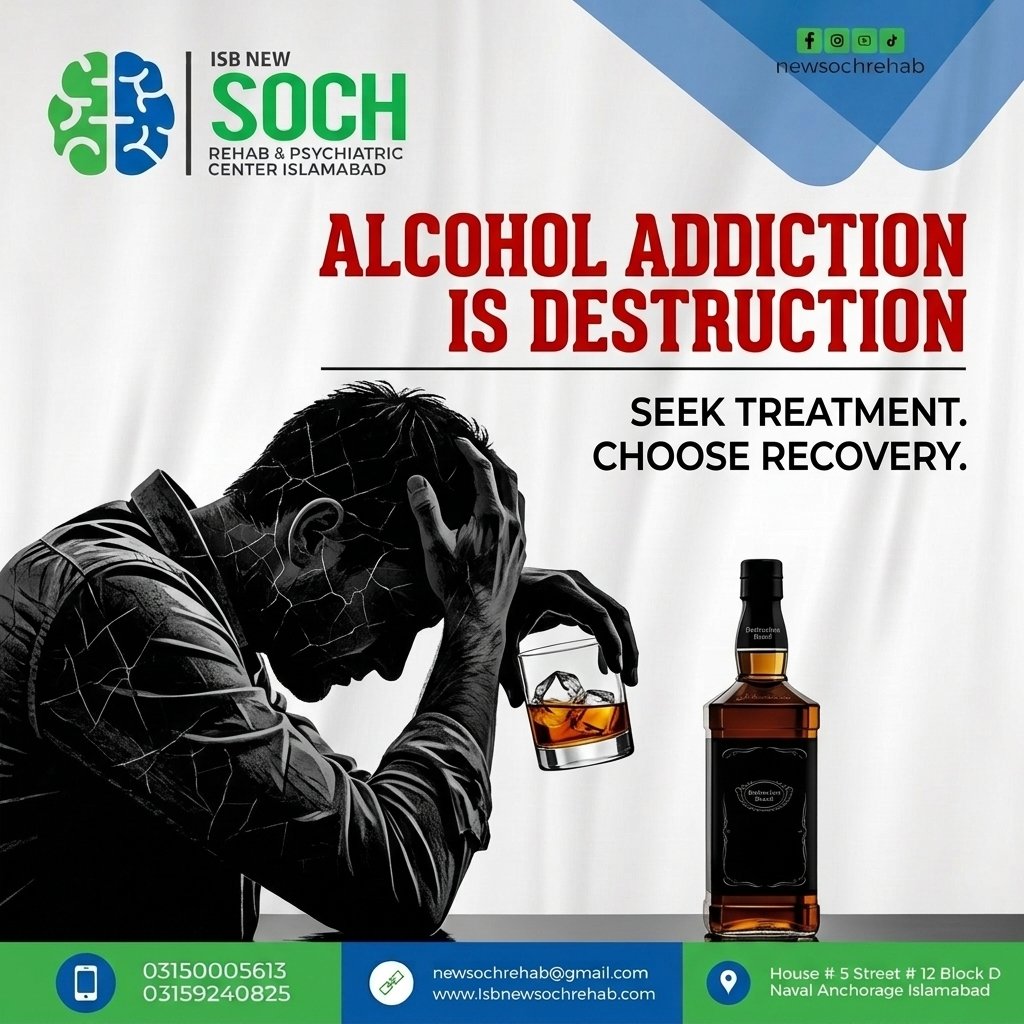
Alcohol addiction, also known as Alcohol Use Disorder (AUD), is a chronic medical condition in which an individual finds it difficult to control or stop drinking despite experiencing negative effects on their health, relationships, work, or daily life. While alcohol is widely consumed in many parts of the world, excessive or prolonged use can lead to physical dependence, emotional challenges, and serious health complications.
Recovery from alcohol addiction is possible with timely intervention, professional treatment, and ongoing support. At New Soch Rehab and Psychiatric Center Islamabad, individuals receive comprehensive, evidence-based care that addresses both the physical and psychological aspects of alcohol addiction. Personalized treatment plans help patients build healthier habits and work toward long-term recovery.
This article explores alcohol addiction, its causes, symptoms, health effects, treatment options, and the importance of continued recovery support.
What Is Alcohol Addiction?
Alcohol addiction is a condition in which a person becomes physically or psychologically dependent on alcohol. Over time, the brain adapts to regular alcohol use, making it increasingly difficult to stop drinking without experiencing withdrawal symptoms.
Alcohol addiction may involve:
- Drinking larger amounts than intended
- Difficulty controlling alcohol consumption
- Continuing to drink despite negative consequences
- Strong cravings for alcohol
- Withdrawal symptoms when alcohol use stops
Without treatment, alcohol addiction can affect nearly every aspect of a person’s life.
Common Causes of Alcohol Addiction
There is no single cause of alcohol addiction. It usually develops through a combination of biological, psychological, and environmental factors.
Genetic Factors
A family history of alcohol dependence may increase an individual’s risk.
Mental Health Conditions
Depression, anxiety, trauma, or chronic stress may contribute to problematic alcohol use.
Social and Environmental Influences
Peer pressure, social drinking habits, and stressful life circumstances may increase alcohol consumption.
Early Alcohol Use
Beginning alcohol use at a young age may increase the likelihood of developing dependence later in life.
At New Soch Rehab and Psychiatric Center Islamabad, treatment focuses on identifying these underlying factors while supporting long-term recovery.
Signs and Symptoms of Alcohol Addiction
Recognizing the warning signs can help individuals seek professional support early.
Physical Symptoms
- Increased tolerance to alcohol
- Tremors or shaking
- Fatigue
- Sleep disturbances
- Nausea during withdrawal
Behavioral Symptoms
- Drinking alone or in secret
- Neglecting family, work, or personal responsibilities
- Unsuccessful attempts to reduce drinking
- Continuing alcohol use despite negative consequences
Psychological Symptoms
- Strong cravings
- Mood swings
- Irritability
- Anxiety
- Difficulty concentrating
Symptoms may vary depending on the severity of alcohol dependence.
Health Effects of Alcohol Addiction
Long-term alcohol misuse can affect both physical and mental health.
Liver Disease
Prolonged alcohol use may contribute to liver damage and other liver-related conditions.
Heart Problems
Excessive alcohol consumption may increase the risk of cardiovascular complications.
Digestive Disorders
Alcohol can affect the stomach, pancreas, and digestive system.
Mental Health Challenges
Alcohol addiction is often associated with depression, anxiety, memory problems, and emotional instability.
Relationship and Social Difficulties
Alcohol misuse may affect family relationships, friendships, employment, and financial stability.
Understanding these risks highlights the importance of seeking early treatment.
Alcohol Withdrawal Symptoms
When someone who is physically dependent on alcohol suddenly stops drinking, withdrawal symptoms may occur.
Common withdrawal symptoms include:
- Sweating
- Tremors
- Anxiety
- Restlessness
- Nausea
- Difficulty sleeping
- Increased heart rate
Because withdrawal can sometimes become severe, professional medical assessment and supervision may be necessary.
Treatment Options for Alcohol Addiction
Recovery from alcohol addiction usually involves a combination of medical care, psychological support, and long-term recovery planning.
Comprehensive Assessment
Treatment begins with a detailed evaluation of the individual’s physical health, mental health, and drinking history.
Medical Detoxification
For individuals with physical dependence, medically supervised detoxification may help manage withdrawal symptoms safely.
Individual Counseling
Counseling helps individuals understand the emotional and behavioral factors contributing to alcohol use.
Cognitive Behavioral Therapy (CBT)
CBT helps patients identify unhealthy thought patterns and develop healthier coping strategies.
Group Therapy
Group sessions provide encouragement, peer support, and opportunities to learn from others in recovery.
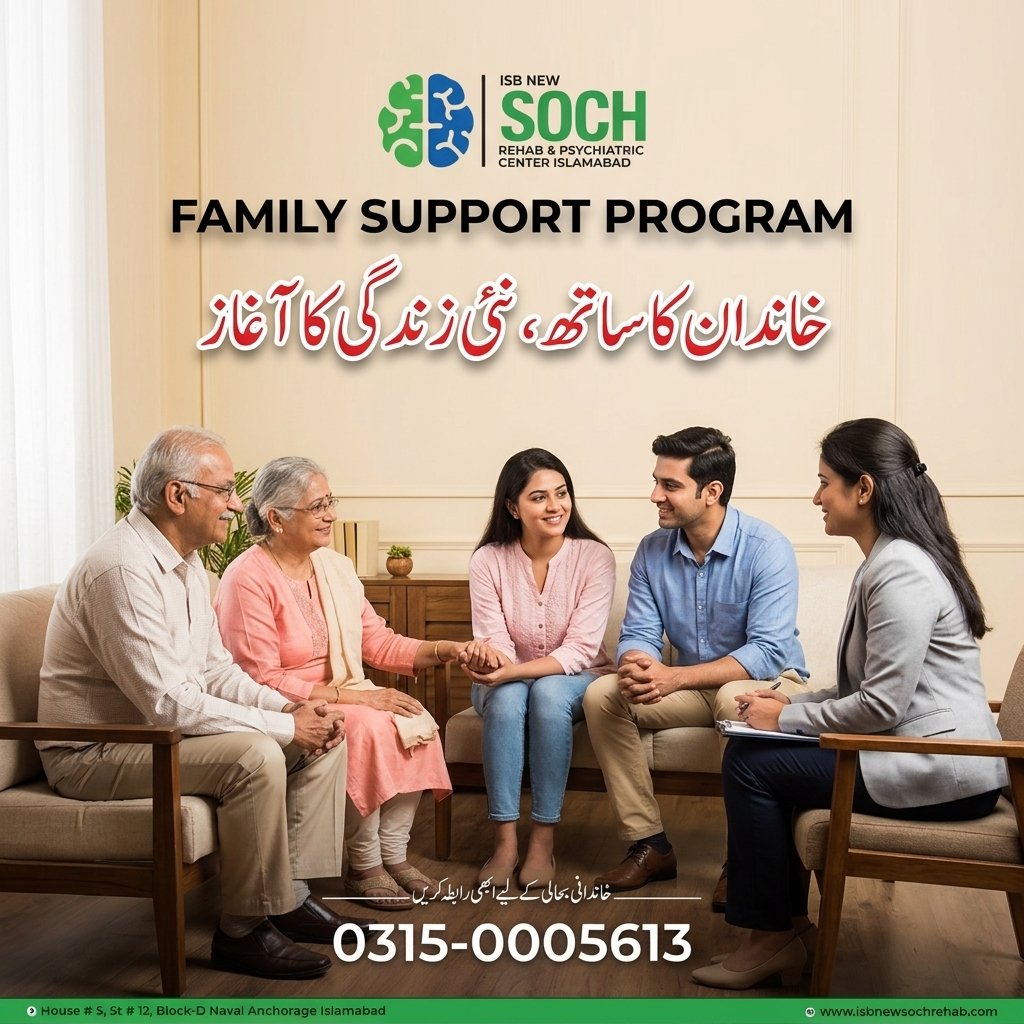
Family Counseling
Family involvement strengthens communication, rebuilds trust, and supports long-term recovery.
At New Soch Rehab and Psychiatric Center Islamabad, treatment plans are individualized to meet each patient’s unique needs.
The Importance of Relapse Prevention
Recovery continues after completing primary treatment. Relapse prevention focuses on helping individuals maintain long-term sobriety.
Helpful strategies include:
- Identifying personal triggers
- Practicing healthy stress management
- Attending regular counseling sessions
- Building supportive relationships
- Following a structured daily routine
- Participating in ongoing aftercare
Long-term recovery is strengthened through consistent professional support and healthy lifestyle changes.
Supporting Recovery Through Healthy Living
Adopting healthier habits can improve both physical and emotional well-being during recovery.
Positive lifestyle changes include:
- Eating a balanced diet
- Exercising regularly
- Maintaining a healthy sleep schedule
- Practicing mindfulness and relaxation techniques
- Engaging in meaningful hobbies
- Building a positive support network
These habits contribute to overall wellness and help reduce the risk of relapse.
Frequently Asked Questions (FAQs)
1. What is alcohol addiction?
Alcohol addiction, or Alcohol Use Disorder, is a condition in which a person has difficulty controlling alcohol use despite experiencing harmful consequences.
2. What are the signs of alcohol addiction?
Common signs include strong cravings, increased tolerance, withdrawal symptoms, neglecting responsibilities, and continued drinking despite negative effects.
3. Is alcohol withdrawal dangerous?
Alcohol withdrawal can sometimes be serious, particularly in individuals with long-term heavy alcohol use. Professional medical assessment is recommended.
4. Can alcohol addiction be treated?
Yes. Treatment may include medical detoxification, counseling, behavioral therapy, family support, and long-term recovery planning.
5. Why is relapse prevention important?
Relapse prevention helps individuals recognize triggers, strengthen coping skills, and maintain long-term recovery after treatment.
Conclusion
Alcohol addiction is a complex but treatable condition that affects physical health, emotional well-being, relationships, and daily life. Early intervention, comprehensive treatment, and ongoing support can help individuals regain control and improve their quality of life.
At New Soch Rehab and Psychiatric Center Islamabad, alcohol addiction treatment combines medical care, psychological support, family involvement, and personalized recovery planning to address each individual’s unique needs. With compassionate, ethical, and evidence-based care, individuals can take meaningful steps toward lasting recovery, improved mental health, and a healthier future.