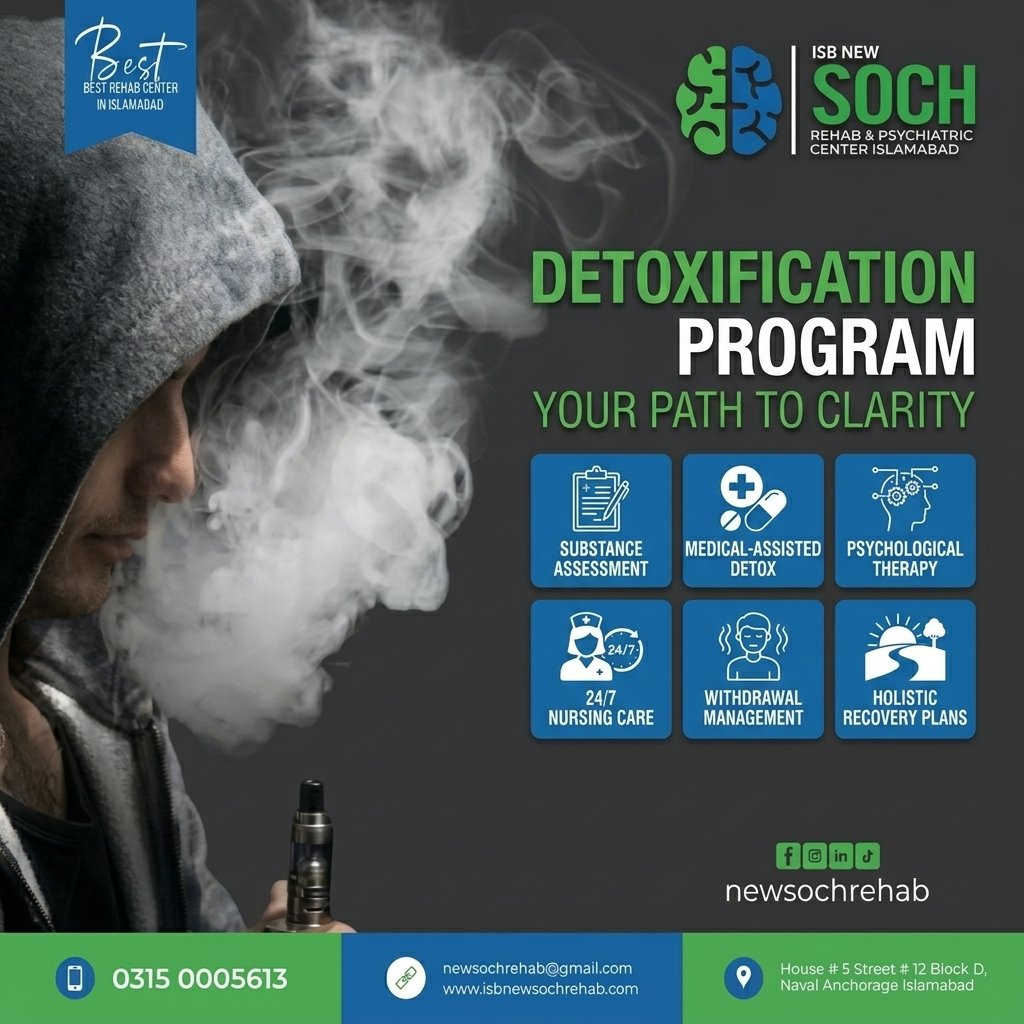
Detoxification is often the first stage of recovery for individuals struggling with substance use disorders. It is the process of allowing the body to eliminate harmful substances while managing withdrawal symptoms under appropriate medical supervision. Although detoxification alone is not a complete treatment for addiction, it creates a safer foundation for ongoing rehabilitation, counseling, and long-term recovery.
At New Soch Rehab and Psychiatric Center Islamabad, detoxification services are provided as part of a comprehensive treatment approach that prioritizes patient safety, dignity, and individualized care. Each treatment plan is developed based on the person’s medical history, substance use pattern, and overall health needs.
This article explains the purpose of detoxification, how it works, its benefits, and why it is an important first step in addiction recovery.
What Is Detoxification?
Detoxification is the medical process of clearing alcohol, drugs, or other addictive substances from the body while helping individuals manage withdrawal symptoms safely. During this phase, healthcare professionals monitor the patient’s physical and emotional condition and provide supportive care when needed.
Detoxification may be recommended for individuals with dependence on substances such as:
- Alcohol
- Opioids
- Heroin
- Prescription medications
- Methamphetamine
- Cannabis
- Other addictive substances
The specific detox process varies depending on the type of substance used and the individual’s overall health.
Why Is Detoxification Important?
Many addictive substances cause physical dependence, meaning the body adapts to their presence over time. When use suddenly stops, withdrawal symptoms can develop.
Detoxification helps by:
- Managing withdrawal symptoms safely
- Reducing physical discomfort
- Monitoring potential medical complications
- Preparing individuals for rehabilitation and therapy
- Supporting a smoother transition into long-term recovery
Detox alone does not address the psychological causes of addiction, but it is often an essential first step.
Who May Need Detoxification?
Detoxification may be appropriate for individuals who:
- Experience withdrawal symptoms when they stop using substances
- Have developed physical dependence
- Have used substances regularly over an extended period
- Have experienced unsuccessful attempts to quit independently
- Require medical supervision during withdrawal
A professional assessment helps determine whether detoxification is necessary.
At New Soch Rehab and Psychiatric Center Islamabad, every patient receives an individualized evaluation before beginning treatment.
Common Withdrawal Symptoms
Withdrawal symptoms vary depending on the substance involved, the duration of use, and the individual’s health.
Common symptoms may include:
Physical Symptoms
- Sweating
- Nausea
- Vomiting
- Headaches
- Muscle aches
- Tremors
- Fatigue
Psychological Symptoms
- Anxiety
- Depression
- Irritability
- Restlessness
- Mood swings
- Difficulty concentrating
Some substances may produce severe withdrawal symptoms that require close medical monitoring.
The Detoxification Process
Detoxification usually follows several important stages.
Initial Assessment
Healthcare professionals review the individual’s medical history, substance use history, mental health status, and physical condition.
Stabilization
The primary goal is to help the patient safely manage withdrawal symptoms while monitoring overall health.
Preparation for Ongoing Treatment
Once detox is complete, patients are encouraged to continue with rehabilitation, counseling, and long-term recovery planning.
Detoxification is most effective when it is followed by comprehensive addiction treatment.
The Role of Medical Supervision
Medical supervision helps ensure that withdrawal symptoms are managed safely and appropriately.
Healthcare professionals monitor:
- Vital signs
- Physical health
- Emotional well-being
- Sleep patterns
- Hydration and nutrition
This level of care helps reduce risks associated with withdrawal and supports patient comfort throughout the process.
Detoxification and Mental Health
Many individuals with substance use disorders also experience mental health conditions such as:
- Depression
- Anxiety disorders
- Trauma-related conditions
- Stress-related disorders
Addressing both addiction and mental health together can improve overall recovery outcomes.
At New Soch Rehab and Psychiatric Center Islamabad, integrated care supports both physical recovery and emotional well-being.
What Happens After Detoxification?
Completing detox is only the beginning of recovery. Long-term treatment is important because addiction also involves behavioral and psychological factors.
After detox, treatment may include:
- Individual counseling
- Cognitive Behavioral Therapy (CBT)
- Group therapy
- Family counseling
- Psychiatric support
- Relapse prevention planning
- Aftercare services
Continuing treatment helps individuals build healthy coping skills and reduce the likelihood of relapse.
Benefits of Professional Detoxification
Professional detoxification offers several important advantages.
Improved Safety
Medical supervision helps manage withdrawal symptoms and identify complications early.
Greater Comfort
Supportive care may help reduce physical and emotional discomfort during withdrawal.
Structured Environment
A supervised setting minimizes access to addictive substances and encourages recovery.
Foundation for Long-Term Recovery
Detox prepares individuals for ongoing rehabilitation and psychological treatment.
Supporting Recovery After Detox
Successful recovery often involves healthy lifestyle changes alongside professional care.
Helpful practices include:
- Attending regular therapy sessions
- Maintaining a healthy sleep schedule
- Eating balanced meals
- Engaging in physical activity
- Practicing stress management
- Building supportive relationships
- Participating in follow-up care
These habits contribute to improved physical and emotional health over time.
Frequently Asked Questions (FAQs)
1. What is detoxification?
Detoxification is the process of safely removing addictive substances from the body while managing withdrawal symptoms under professional supervision.
2. Is detoxification enough to overcome addiction?
No. Detoxification addresses physical dependence, but long-term recovery usually requires counseling, therapy, and ongoing support.
3. How long does detoxification take?
The duration varies depending on the substance used, the length of use, and the individual’s overall health.
4. Can withdrawal symptoms be serious?
Yes. Some withdrawal symptoms can be severe, making medical supervision important for certain substances.
5. What happens after detoxification?
Most individuals continue with rehabilitation, therapy, relapse prevention, and aftercare to support long-term recovery.
Conclusion
Detoxification is an important first step in overcoming substance use disorders. By helping individuals safely manage withdrawal symptoms, detox provides a strong foundation for continued treatment and long-term recovery. However, lasting recovery requires more than physical detox—it also involves addressing the emotional, psychological, and behavioral aspects of addiction.
At New Soch Rehab and Psychiatric Center Islamabad, detoxification is provided as part of a comprehensive, patient-centred approach that combines medical care, psychological support, and personalised recovery planning. With appropriate professional guidance and ongoing treatment, individuals can take meaningful steps toward improved health, emotional well-being, and a substance-free future.Detoxification – The First Step Toward Safe Addiction Recovery
Detoxification is often the first stage of recovery for individuals struggling with substance use disorders. It is the process of allowing the body to eliminate harmful substances while managing withdrawal symptoms under appropriate medical supervision. Although detoxification alone is not a complete treatment for addiction, it creates a safer foundation for ongoing rehabilitation, counseling, and long-term recovery.
At New Soch Rehab and Psychiatric Center Islamabad, detoxification services are provided as part of a comprehensive treatment approach that prioritizes patient safety, dignity, and individualized care. Each treatment plan is developed based on the person’s medical history, substance use pattern, and overall health needs.
This article explains the purpose of detoxification, how it works, its benefits, and why it is an important first step in addiction recovery.
What Is Detoxification?
Detoxification is the medical process of clearing alcohol, drugs, or other addictive substances from the body while helping individuals manage withdrawal symptoms safely. During this phase, healthcare professionals monitor the patient’s physical and emotional condition and provide supportive care when needed.
Detoxification may be recommended for individuals with dependence on substances such as:
- Alcohol
- Opioids
- Heroin
- Prescription medications
- Methamphetamine
- Cannabis
- Other addictive substances
The specific detox process varies depending on the type of substance used and the individual’s overall health.
Why Is Detoxification Important?
Many addictive substances cause physical dependence, meaning the body adapts to their presence over time. When use suddenly stops, withdrawal symptoms can develop.
Detoxification helps by:
- Managing withdrawal symptoms safely
- Reducing physical discomfort
- Monitoring potential medical complications
- Preparing individuals for rehabilitation and therapy
- Supporting a smoother transition into long-term recovery
Detox alone does not address the psychological causes of addiction, but it is often an essential first step.
Who May Need Detoxification?
Detoxification may be appropriate for individuals who:
- Experience withdrawal symptoms when they stop using substances
- Have developed physical dependence
- Have used substances regularly over an extended period
- Have experienced unsuccessful attempts to quit independently
- Require medical supervision during withdrawal
A professional assessment helps determine whether detoxification is necessary.
At New Soch Rehab and Psychiatric Center Islamabad, every patient receives an individualized evaluation before beginning treatment.
Common Withdrawal Symptoms
Withdrawal symptoms vary depending on the substance involved, the duration of use, and the individual’s health.
Common symptoms may include:
Physical Symptoms
- Sweating
- Nausea
- Vomiting
- Headaches
- Muscle aches
- Tremors
- Fatigue
Psychological Symptoms
- Anxiety
- Depression
- Irritability
- Restlessness
- Mood swings
- Difficulty concentrating
Some substances may produce severe withdrawal symptoms that require close medical monitoring.
The Detoxification Process
Detoxification usually follows several important stages.
Initial Assessment
Healthcare professionals review the individual’s medical history, substance use history, mental health status, and physical condition.
Stabilization
The primary goal is to help the patient safely manage withdrawal symptoms while monitoring overall health.
Preparation for Ongoing Treatment
Once detox is complete, patients are encouraged to continue with rehabilitation, counseling, and long-term recovery planning.
Detoxification is most effective when it is followed by comprehensive addiction treatment.
The Role of Medical Supervision
Medical supervision helps ensure that withdrawal symptoms are managed safely and appropriately.
Healthcare professionals monitor:
- Vital signs
- Physical health
- Emotional well-being
- Sleep patterns
- Hydration and nutrition
This level of care helps reduce risks associated with withdrawal and supports patient comfort throughout the process.
Detoxification and Mental Health
Many individuals with substance use disorders also experience mental health conditions such as:
- Depression
- Anxiety disorders
- Trauma-related conditions
- Stress-related disorders
Addressing both addiction and mental health together can improve overall recovery outcomes.
At New Soch Rehab and Psychiatric Center Islamabad, integrated care supports both physical recovery and emotional well-being.
What Happens After Detoxification?
Completing detox is only the beginning of recovery. Long-term treatment is important because addiction also involves behavioral and psychological factors.
After detox, treatment may include:
- Individual counseling
- Cognitive Behavioral Therapy (CBT)
- Group therapy
- Family counseling
- Psychiatric support
- Relapse prevention planning
- Aftercare services
Continuing treatment helps individuals build healthy coping skills and reduce the likelihood of relapse.
Benefits of Professional Detoxification
Professional detoxification offers several important advantages.
Improved Safety
Medical supervision helps manage withdrawal symptoms and identify complications early.
Greater Comfort
Supportive care may help reduce physical and emotional discomfort during withdrawal.
Structured Environment
A supervised setting minimizes access to addictive substances and encourages recovery.
Foundation for Long-Term Recovery
Detox prepares individuals for ongoing rehabilitation and psychological treatment.
Supporting Recovery After Detox
Successful recovery often involves healthy lifestyle changes alongside professional care.
Helpful practices include:
- Attending regular therapy sessions
- Maintaining a healthy sleep schedule
- Eating balanced meals
- Engaging in physical activity
- Practicing stress management
- Building supportive relationships
- Participating in follow-up care
These habits contribute to improved physical and emotional health over time.
Frequently Asked Questions (FAQs)
1. What is detoxification?
Detoxification is the process of safely removing addictive substances from the body while managing withdrawal symptoms under professional supervision.
2. Is detoxification enough to overcome addiction?
No. Detoxification addresses physical dependence, but long-term recovery usually requires counseling, therapy, and ongoing support.
3. How long does detoxification take?
The duration varies depending on the substance used, the length of use, and the individual’s overall health.
4. Can withdrawal symptoms be serious?
Yes. Some withdrawal symptoms can be severe, making medical supervision important for certain substances.
5. What happens after detoxification?
Most individuals continue with rehabilitation, therapy, relapse prevention, and aftercare to support long-term recovery.
Conclusion
Detoxification is an important first step in overcoming substance use disorders. By helping individuals safely manage withdrawal symptoms, detox provides a strong foundation for continued treatment and long-term recovery. However, lasting recovery requires more than physical detox—it also involves addressing the emotional, psychological, and behavioral aspects of addiction.
At New Soch Rehab and Psychiatric Center Islamabad, detoxification is provided as part of a comprehensive, patient-centred approach that combines medical care, psychological support, and personalised recovery planning. With appropriate professional guidance and ongoing treatment, individuals can take meaningful steps toward improved health, emotional well-being, and a substance-free future.