Addiction and mental health challenges do not only affect the individual—they also impact the entire family. Emotional stress, communication breakdowns, confusion, and uncertainty are common experiences for loved ones when someone is struggling with substance use or psychological difficulties. This is why a strong Family Support Program plays an important role in the healing and recovery process.
At New Soch Rehab and Psychiatric Center Islamabad, family support is recognized as an essential part of treatment and long-term recovery. The center provides structured family guidance, counseling, and education to help families better understand addiction, mental health conditions, and how to support their loved ones effectively.
This article explains the importance of family support programs, how they work, and how they contribute to emotional healing and long-term stability.
What Is a Family Support Program?
A family support program is a structured approach designed to involve family members in the treatment and recovery process. It provides emotional support, education, and communication strategies to help families understand what their loved one is going through.
These programs may include:
- Family counseling sessions
- Educational workshops
- Emotional support guidance
- Conflict resolution strategies
- Recovery planning discussions
The goal is to create a healthier and more supportive environment for both the patient and their family.
Why Family Support Is Important in Recovery
Recovery from addiction or mental health challenges often becomes stronger when family members are involved.
Family support can help:
- Reduce feelings of isolation
- Improve motivation for treatment
- Strengthen emotional stability
- Encourage accountability
- Improve communication
When families understand the recovery process, they can offer support in healthier and more effective ways.
At New Soch Rehab and Psychiatric Center Islamabad, family involvement is encouraged whenever appropriate.
How Addiction Affects Families

Addiction can create emotional and practical difficulties for family members.
Emotional Stress
Families may experience anxiety, sadness, anger, or guilt.
Trust Issues
Repeated substance use or dishonesty can damage trust.
Financial Challenges
Addiction may create financial instability within the household.
Communication Problems
Misunderstandings and emotional tension can increase conflict.
Recognizing these effects helps families understand why support programs are necessary.
How Mental Health Conditions Affect Family Relationships
Mental health conditions such as depression, anxiety, or trauma can also influence family dynamics.
Common challenges include:
- Difficulty expressing emotions
- Increased misunderstandings
- Emotional distance
- Caregiver stress
- Feelings of helplessness
Family support programs can help improve understanding and reduce emotional strain.
Key Components of a Family Support Program
A strong family support program often includes several important elements.
Family Counseling
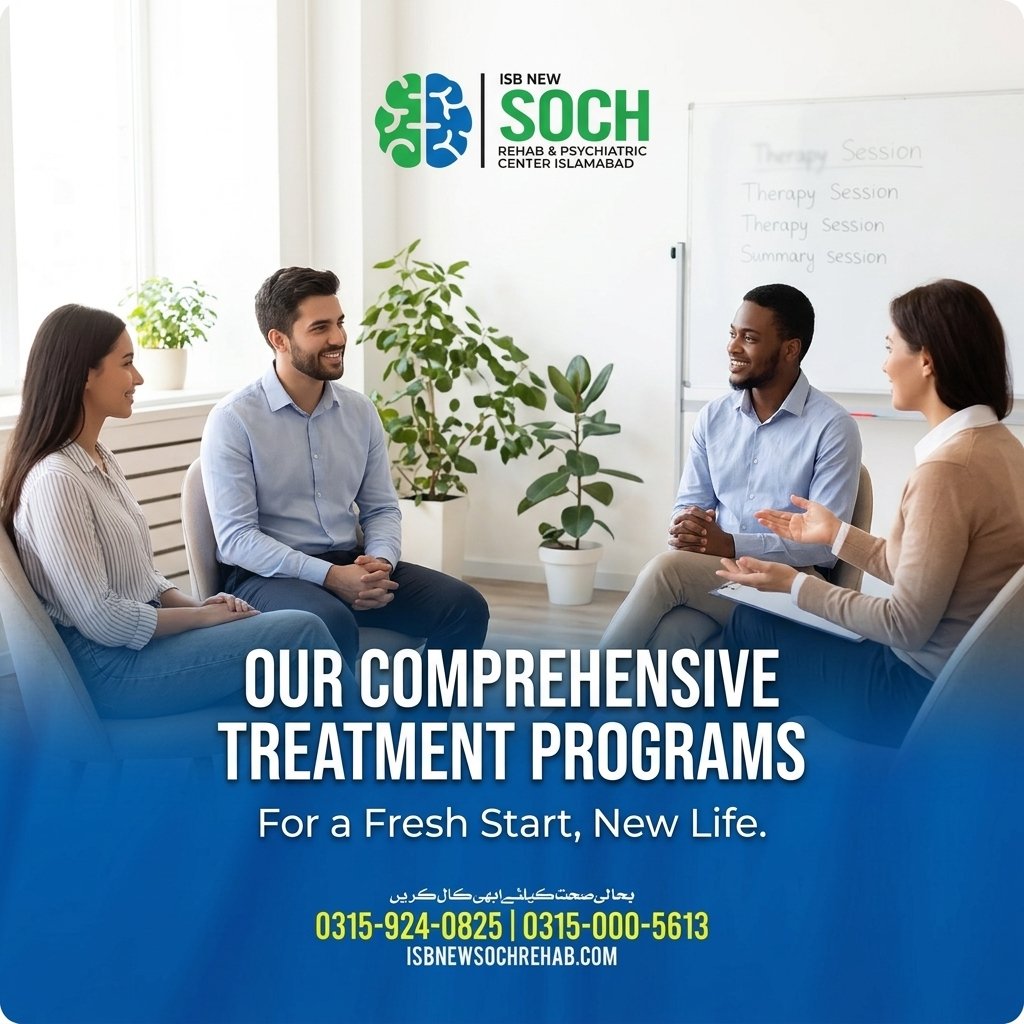
Counseling sessions allow family members to discuss concerns openly in a safe environment.
Education About Addiction and Mental Health
Understanding the condition helps families respond with greater awareness and patience.
Communication Skills Training
Families learn healthier ways to communicate and resolve conflicts.
Boundary Setting
Healthy boundaries protect both the individual in recovery and the family.
Relapse Awareness
Families learn to recognize warning signs and understand how to respond appropriately.
At New Soch Rehab and Psychiatric Center Islamabad, these components are integrated into treatment planning.
Benefits of Family Counseling
Family counseling can help improve both emotional and practical aspects of recovery.
Benefits include:
- Better communication
- Rebuilding trust
- Reduced emotional stress
- Stronger relationships
- Improved problem-solving skills
These benefits can create a healthier environment that supports long-term recovery.
How Families Can Support a Loved One in Recovery
Families can play an active and positive role in recovery.
Encourage Treatment
Supporting professional treatment and regular follow-ups can improve outcomes.
Listen Without Judgment
Open, respectful communication helps build trust.
Promote Healthy Routines
Encouraging sleep, healthy eating, and stress management can support emotional balance.
Be Patient
Recovery takes time, and setbacks can happen.
Take Care of Your Own Mental Health
Family members also need emotional support and self-care.
At New Soch Rehab and Psychiatric Center Islamabad, families are guided on how to provide healthy support while maintaining their own well-being.
Challenges Families May Face During Recovery
Supporting someone through recovery can be emotionally demanding.
Common challenges include:
- Fear of relapse
- Emotional exhaustion
- Difficulty rebuilding trust
- Managing expectations
- Coping with uncertainty
Family support programs help address these challenges through counseling and education.
Long-Term Importance of Family Support
Recovery does not end after treatment. Long-term family support can help individuals maintain progress and build healthier lifestyles.
Ongoing family involvement can:
- Strengthen emotional resilience
- Improve stability
- Encourage continued treatment
- Reduce relapse risk
- Build healthier family relationships
A supportive home environment can make a significant difference in long-term recovery.
Frequently Asked Questions (FAQs)
1. What is a family support program?
A family support program helps family members understand addiction or mental health challenges and teaches them how to support recovery.
2. Why is family involvement important in recovery?
Family support can improve motivation, emotional stability, and communication during recovery.
3. Can family counseling rebuild trust?
Family counseling can help address communication issues and support the rebuilding of trust over time.
4. How can families help prevent relapse?
By recognizing warning signs, encouraging healthy routines, and supporting treatment plans.
5. Can family members also receive emotional support?
Yes, family support programs often provide counseling and guidance for family members as well.
Conclusion
A strong Family Support Program is an important part of both addiction recovery and mental health treatment. It helps families understand challenges, improve communication, and create a healthier environment for healing.
At New Soch Rehab and Psychiatric Center Islamabad, family support is integrated into treatment to strengthen recovery and promote long-term emotional well-being.
When families heal together, recovery becomes more sustainable, relationships become stronger, and individuals have a better chance of building a healthier future.