Smoking addiction is one of the most common forms of substance dependence worldwide. Many people begin smoking casually, often influenced by stress, social environments, or curiosity, but over time it can develop into a strong physical and psychological dependency. Nicotine, the addictive substance in tobacco, affects the brain quickly and makes quitting difficult for many individuals.
Smoking addiction does not only impact the smoker; it can also affect family members, workplace performance, and overall quality of life. Long-term tobacco use is associated with serious health concerns and emotional challenges.
At New Soch Rehab and Psychiatric Center Islamabad, individuals struggling with smoking addiction can receive structured support, counseling, and mental health care to help manage nicotine dependence and build healthier habits.
This article explores smoking addiction, its causes, effects, and treatment options.
What Is Smoking Addiction?
Smoking addiction is a condition where a person becomes dependent on nicotine and finds it difficult to stop smoking despite understanding the health risks. Nicotine stimulates the brain and creates temporary feelings of relaxation or alertness, which reinforces repeated use.
Over time, the brain adapts to nicotine, leading to cravings and withdrawal symptoms when smoking is reduced or stopped.
Smoking addiction may involve:
- Cigarettes
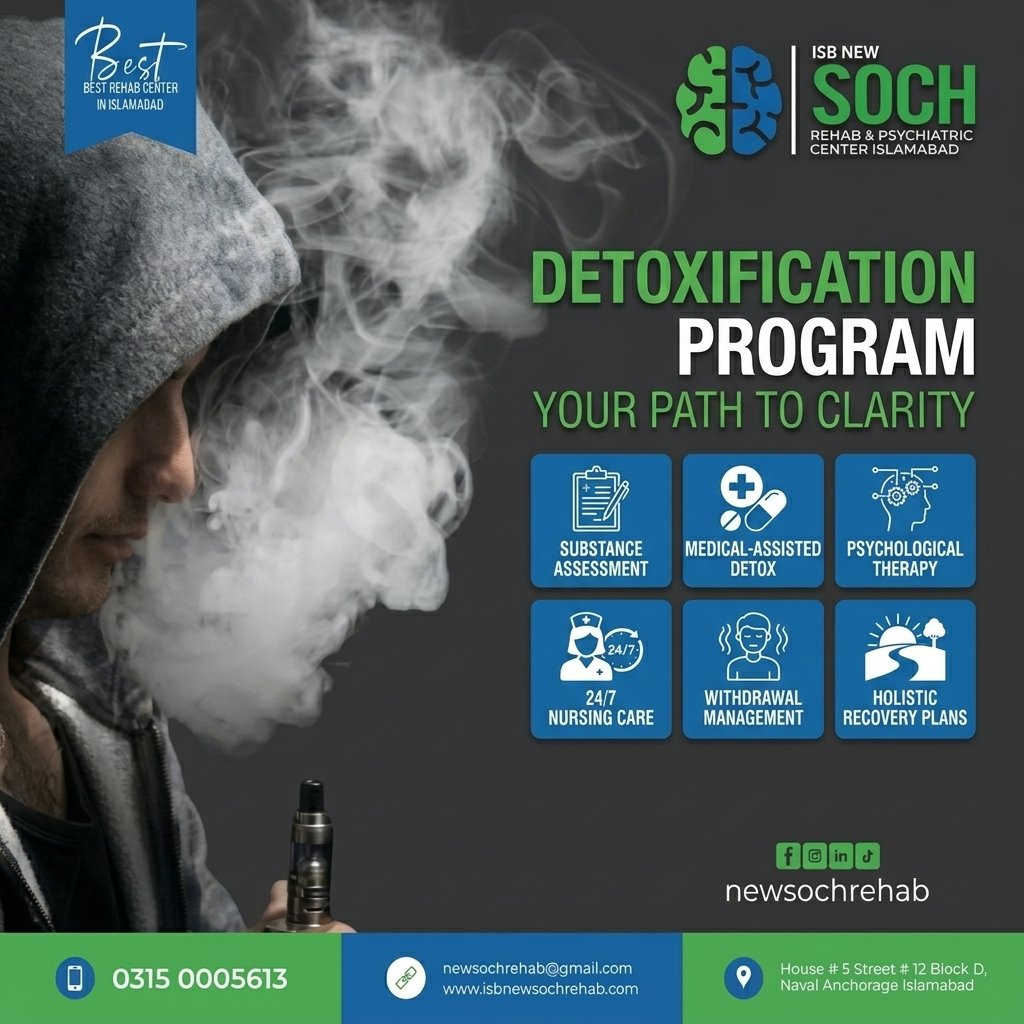
- E-cigarettes or vaping
- Cigars
- Other tobacco products
Understanding nicotine dependence is the first step toward recovery.
Why Is Nicotine So Addictive?
Nicotine reaches the brain within seconds after inhalation. It triggers the release of dopamine, a chemical linked to pleasure and reward.
This can create:
- Temporary stress relief
- Improved concentration
- Relaxation
- Mood improvement
However, these effects are short-lived, causing the brain to seek more nicotine repeatedly. This cycle strengthens addiction over time.
Common Causes of Smoking Addiction
Smoking addiction can develop due to several factors.
Stress and Anxiety
Many people use smoking as a way to cope with emotional pressure.
Social Influence
Peer pressure, family habits, or social settings may contribute to starting smoking.
Habit Formation
Smoking often becomes part of daily routines, such as after meals or during breaks.
Mental Health Conditions
Individuals experiencing depression, anxiety, or trauma may be at a higher risk of nicotine dependence.
At New Soch Rehab and Psychiatric Center Islamabad, treatment focuses on understanding these underlying triggers.
Signs of Smoking Addiction
Some signs may indicate nicotine dependence.
Physical Signs
- Strong cravings for cigarettes
- Restlessness when unable to smoke
- Increased smoking frequency
- Difficulty reducing tobacco use
Behavioral Signs
- Smoking during stressful situations
- Using cigarettes as emotional support
- Prioritizing smoking over responsibilities
- Repeated failed attempts to quit
Recognizing these signs early can help individuals seek support sooner.
Health Effects of Smoking Addiction
Smoking affects nearly every part of the body. The longer a person smokes, the greater the risk of health complications.
Respiratory Problems
Smoking can affect lung function and breathing.
Heart Disease
Nicotine and tobacco chemicals may increase the risk of cardiovascular problems.
Weakened Immune System
Smoking may reduce the body’s ability to fight infections.
Mental Health Effects
Smoking addiction may contribute to stress, irritability, and emotional dependency.
Impact on Family Health
Secondhand smoke can affect the health of family members, especially children.
Understanding these effects can motivate individuals to consider quitting.
Withdrawal Symptoms After Quitting Smoking
Nicotine withdrawal can be challenging, especially in the early stages of quitting.
Common symptoms include:
- Irritability
- Anxiety
- Difficulty concentrating
- Restlessness
- Increased appetite
- Sleep disturbances
- Mood swings
These symptoms are temporary, but they can make quitting difficult without support.
Treatment Options for Smoking Addiction
Recovery from smoking addiction often requires a combination of behavioral support and professional guidance.
Behavioral Counseling
Counseling helps individuals understand triggers and develop healthier coping strategies.
Cognitive Behavioral Therapy (CBT)
CBT can help change negative thought patterns associated with smoking habits.
Stress Management Techniques
Relaxation methods, breathing exercises, and mindfulness can reduce cravings.
Psychological Support
Mental health care can be important, especially when smoking is linked to anxiety or depression.
At New Soch Rehab and Psychiatric Center Islamabad, personalized support is available for individuals working to overcome nicotine dependence.
The Role of Family Support
Family support can make a significant difference during recovery.
Helpful family support includes:
- Encouragement during cravings
- Creating a smoke-free environment
- Understanding withdrawal challenges
- Supporting healthier routines
A supportive environment can strengthen motivation and improve long-term outcomes.
Benefits of Quitting Smoking
Quitting smoking can improve health and quality of life over time.
Benefits may include:
- Better breathing
- Improved energy levels
- Reduced stress over time
- Better sleep
- Improved taste and smell
- Lower risk of smoking-related health conditions
Even small steps toward quitting can lead to meaningful improvements.
Frequently Asked Questions (FAQs)
1. What causes smoking addiction?
Smoking addiction is mainly caused by nicotine dependence, often influenced by stress, habits, and social factors.
2. Why is it hard to quit smoking?
Nicotine affects the brain’s reward system, causing cravings and withdrawal symptoms.
3. Can smoking affect mental health?
Yes, smoking can increase emotional dependency and may worsen anxiety or stress over time.
4. How long do nicotine withdrawal symptoms last?
Withdrawal symptoms vary but are often strongest in the first few days or weeks.
5. Is professional support helpful for quitting smoking?
Yes, counseling and structured support can improve coping skills and increase the chances of long-term success.
Conclusion
Smoking addiction is a serious health concern that affects both physical and emotional well-being. While nicotine dependence can be difficult to overcome, recovery is possible with the right support and treatment.
At New Soch Rehab and Psychiatric Center Islamabad, individuals struggling with smoking addiction can access professional care, counseling, and mental health support in a safe and confidential environment.
Taking the first step toward quitting smoking can lead to better health, stronger emotional balance, and a healthier future for both individuals and their families.